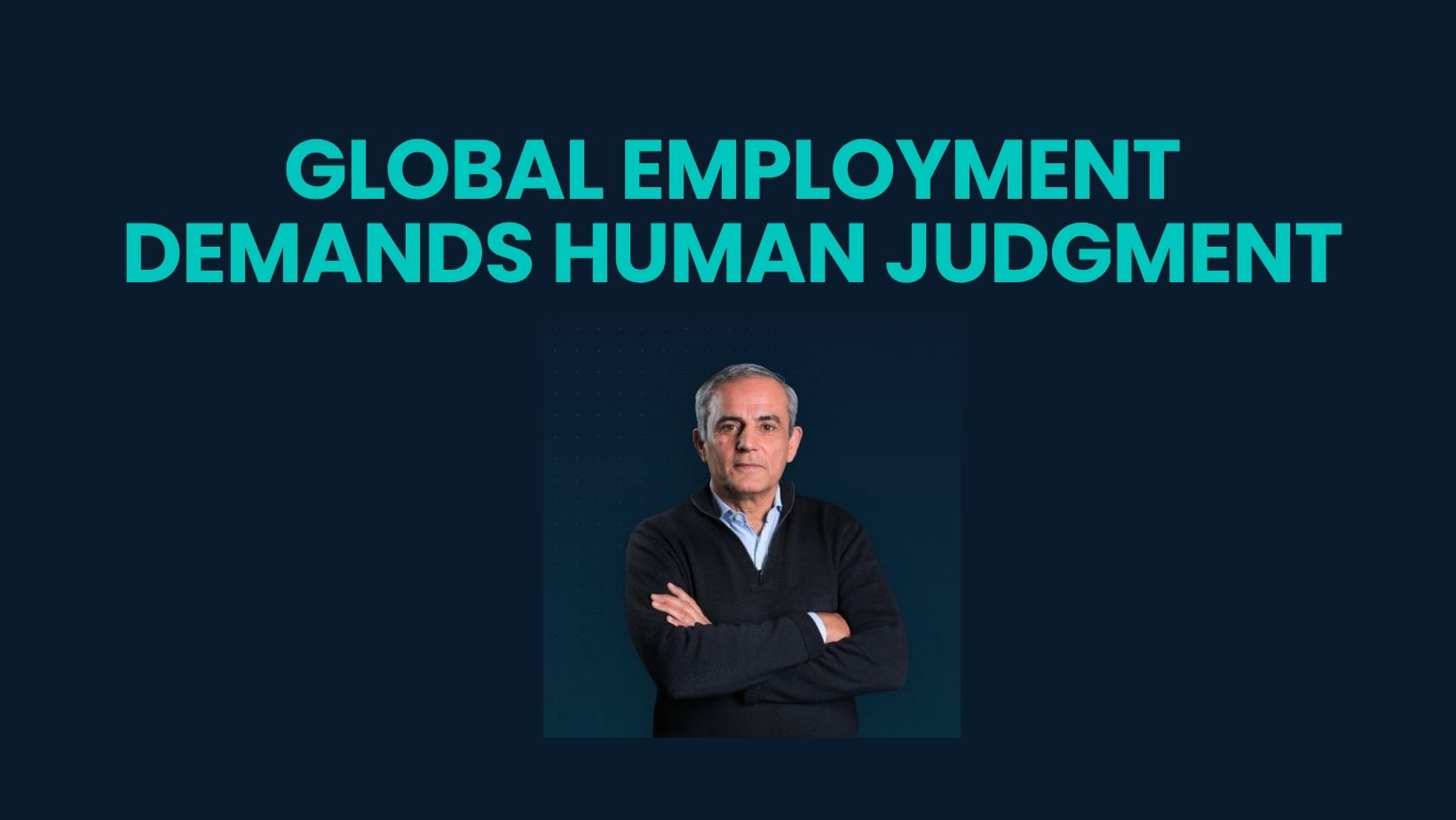
By Abid Hamid, Group CEO, Acumen International
There is a growing tendency to treat global employment as a workflow problem to be streamlined and automated. But in the situations that matter most, it is a judgment problem and judgment still belongs to people.
Global hiring is now more accessible than ever. Businesses can explore new markets faster, compare jurisdictions more easily, and move talent across borders with a level of speed that would have been unimaginable a decade ago.
The market has changed, but the stakes have not.
Technology absolutely matters. It improves visibility, consistency, and speed. But in many of the situations that matter most, global employment is not just a workflow problem.
Where Global Employment Gets Real
Acumen’s own compliance analysis makes a point I believe more business leaders need to hear: most international compliance failures do not begin with deliberate shortcuts.
They begin with assumptions.
When business leaders look at a sleek digital dashboard, it is easy to assume that a familiar employment model will work in a brand-new country. They assume a contractor can be treated the same way everywhere, or that a quick administrative setup is the same thing as a defensible legal structure.
That is precisely where global employment gets real, and where the risk begins.
That is the exact moment when standard workflows break down, and human judgment becomes your only real shield.
Navigating the Grey
Some global employment needs are straightforward. Others are anything but. They involve a complicated mix of local labour law, worker classification, payroll obligations, employee benefits expectations, immigration realities, and business urgency.
They may involve remote or underserved markets. They may involve sensitive jurisdictions. They may involve a role where the line between control and legal responsibility is not as simple as it first appears.
Asking the Right Questions: The Limits of Automation
I am not arguing against platforms or automation. Used well, they are powerful.
Technology should enhance expertise, not replace it.
However, when the employment scenario is nuanced, commercially sensitive, or high-risk, the right question is not simply: “How quickly can this be processed?”
The better question is: “Have we properly understood the risk before we act?”
That is a very different standard.
Built for the Complex Scenarios
That is where Acumen is deliberately different.
We are not built only for the easiest cases. We are built for both standard and complex employment scenarios, with a human-led, boutique approach across 190+ countries.
We work in developed, remote, and high-risk markets.
We support immigration, payroll, benefits, onboarding, ongoing in-country support, and the kinds of unpredictable situations where responsiveness and problem-solving are not optional extras.
They are the service itself.


Technology is a magnificent accelerator, but it cannot be your strategist.
A platform will flawlessly execute whatever instructions you feed it, even the wrong ones.
In global expansion, you don’t just need a tool that builds the bridge faster; you need someone who knows if the ground beneath it is solid.
Abid Hamid
Group CEO, Acumen International